“We saw Iranian planes and American planes come in with arms and military equipment… I saw it myself, the planes.”
Thorvald Stoltenberg. former UN Peace Negotiator Continue reading

“We saw Iranian planes and American planes come in with arms and military equipment… I saw it myself, the planes.”
Thorvald Stoltenberg. former UN Peace Negotiator Continue reading

“In 1933, the year Hitler came to power, the Third Reich began to publish a racist magazine titled lran-e Bastan (The Ancient Iran). The journal was financed by Siemens-Schukken and pro-Nazi Iranian intellectuals. It referred to Hitler as “one of the greatest men in the world.” It depicted him as the man who ended the alleged 200 year old plot by Jews against the nationalities of the world, especially the Aryans.
The journal also claimed that the swastika was a symbol of Iranians from 2000 years before Christ and they rejoiced over its use as a symbol of German pride and of unity between the Iranian and German peoples.” Continue reading
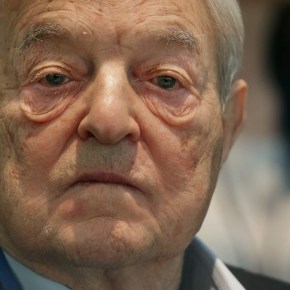
Iranian Foreign Minister Mohammad Zarif said Sunday that the Iranian government has worked closely with billionaire George Soros’ Open Society Foundations (OSF) organization. Continue reading

‘Whistleblower’ calls out John Kerry, says he ‘knows for fact’ Obama admin sent multiple letters directly to Soleimani January 10, 2020 | Frieda Powers Middle East expert Michael Doran slammed former Secretary of State John Kerry in a series of tweets exposing the Obama administration’s dealings with Iran. “I must become a whistleblower,” Doran, a senior … Continue reading

“I think that some of it will end up in the hands of the IRGC or of other entities some of which are labeled terrorists.” – John Kerry, speaking as former U.S. Secretary of State serving President Obama in 2016 Continue reading
![Bill Clinton sought big payday from Iranian regime front group NIAC one month before Hillary launched secret meetings with Iran as Obama’s Secretary of State [Video]](https://adarapress.com/wp-content/uploads/2020/01/clinton-bill-and-hillary.jpg?w=290&h=290&crop=1 "Bill Clinton sought big payday from Iranian regime front group NIAC one month before Hillary launched secret meetings with Iran as Obama’s Secretary of State [Video]")
Even before Bill Clinton was looking to cash in on Hillary’s position as Secretary of State with his Iranian wartime collaborators in the Bosnia, a bipartisan effort was afoot–supported by George Soros, Ron Paul, Grover Norquist, Keith Ellison, and the Muslim Brotherhood front group CAIR among others–to launch a campaign to “send Hillary to … Continue reading
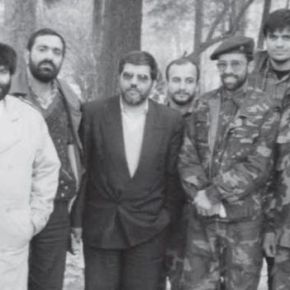
The war in Balkan and beginning of Iran’s influence
Iranians put their feet on the ground in Bosnia and Herzegovina just six months after the war had started. Iran sent thousands of its IRGC fighters as staff members of Iran’s Red Crescent. This was confessed by brigadier Saeed Kasemy, a field commander in Bosnia and Herzegovina at that time. On June 2, 1994, the Washington Times wrote that 400 fighters of IRGC entered Bosnia in May of 1994, according to intelligence sources.
At that time, some intelligence sources reported that 3,000-4,000 fighters of IRGC were based in Bosnia in addition to 400 fighters of the Lebanese Hezbollah. Continue reading
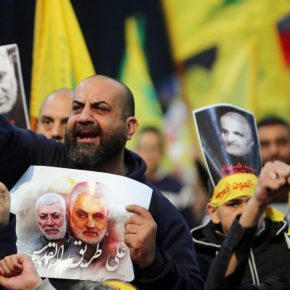
“With General Sulejmani I personally met him twice in Iran, once in Tehran at a conference 2016, and the second time in the town of Meade a year later. He seemed very humble, he was seen to weigh every word he made. Although we did not talk long ago, when he found out I was from Croatia, he only received the question: “What is the situation in BiH? [Bosnia] ” To my question if he was in BiH [Bosnia], Kasem replied: “Of course I was, but a long time ago, 1993. and 1994. Wherever Muslims need help, I am here “. I told him to keep it safe, and his answer was: “Pray for me to die as a martyr, it is my greatest wish,” Continue reading
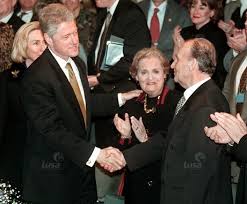
In 1992 the New York Times reported that the Bosnian President Alija Izetbegovic himself made an official state visit to Tehran where he met with Iranian leaders and, while appearing on Iranian television, threatened to
use poison gas against the Serbian people.
During his visit he attended a ceremony during which his delegation laid a wreath on the tomb of Ayatollah Ruhollah Khomeini, the leader of “Iran’s Islamic revolution”.
Hashemi Rafsanjani, the Iranian President at the time, gave assurances to the new Bosnian President that “more significant aid” would be forthcoming…” with senior Iranian officials calling for “retaliatory measures against the Serbs by Muslims across the world” “ in response to what they described was “a new Crusade of Christians against Muslims.”
But the Muslim Bosnian Leadership weren’t just traveling to Tehran. They were visiting Washington too—meeting, in fact, with the leader of the Free World.
On March 26, 1993, just six months after Izetbegovic visited Ayatollah Khomeini’s tomb, he was received by the newly inaugurated President of the United States: Bill Clinton. Continue reading

Introduction: Promoting Iranian Influence in Bosnia
Although many details await a truthful accounting from the White House, the main outlines of the Administration’s Iran-Bosnia policy were laid out in The Los Angeles Times’ April 4, 1996 report breaking the story:
“President Clinton secretly gave a green light to covert Iranian arms shipments into Bosnia in 1994 despite a United Nations arms embargo that the United States was pledged to uphold and the Administration’s own policy of isolating Tehran globally as a supporter of terrorism, according to senior Administration officials and other sources. Two top U.S. diplomats, acting on instructions from the White House and the State Department, told Croatian President Franjo Tudjman in early 1994 that the United States would not object to the creation of an arms pipeline that would channel the weapons through Croatia and into Bosnia-Herzegovina….after consultations with National Security Adviser Anthony Lake and Deputy Secretary of State Strobe Talbott….The operation continued until January of this year, even after nearly 20,000 American troops began to be deployed as peacekeepers in Bosnia, Clinton Administration officials said.”
[…]
“When French commandos stormed an isolated chalet in Bosnia on February 15, 1996, they found a terrorist training center replete with sniper rifles, rocket launchers, and explosives disguised as children’s toys. Later that month, IFOR arrested three Iranians manning this terrorist camp.
And Iran’s influence is not limited to Iranians coming to Bosnia. The New York Times on March 3, 1996 quoted a senior European military officer as stating that his government had evidence that Bosnia sent troops to Iran. He rightly suggested that ideological indoctrination represented an even bigger threat to the West than the technical training those troops received.” Continue reading
 Adara Press